.png)
Mô tả
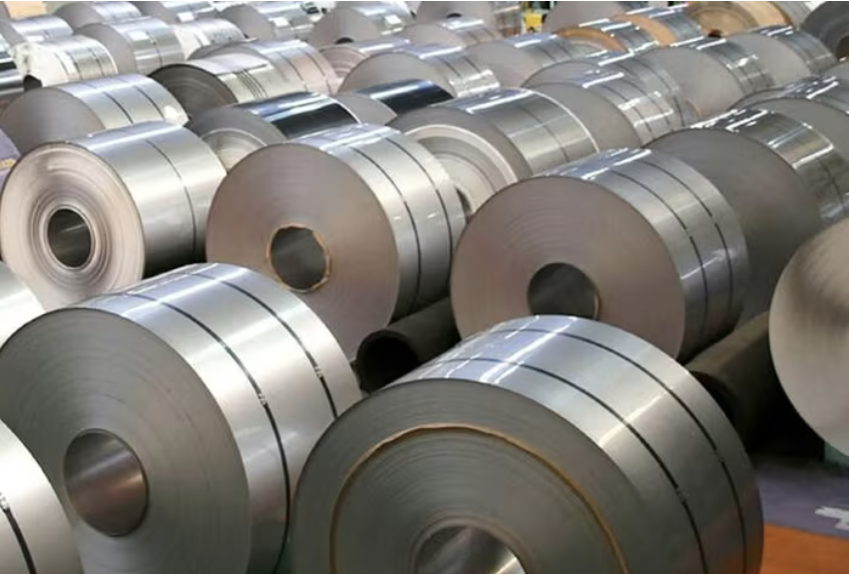
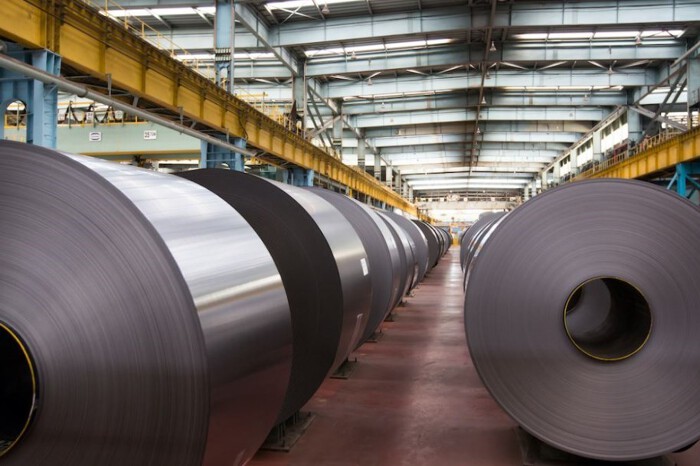
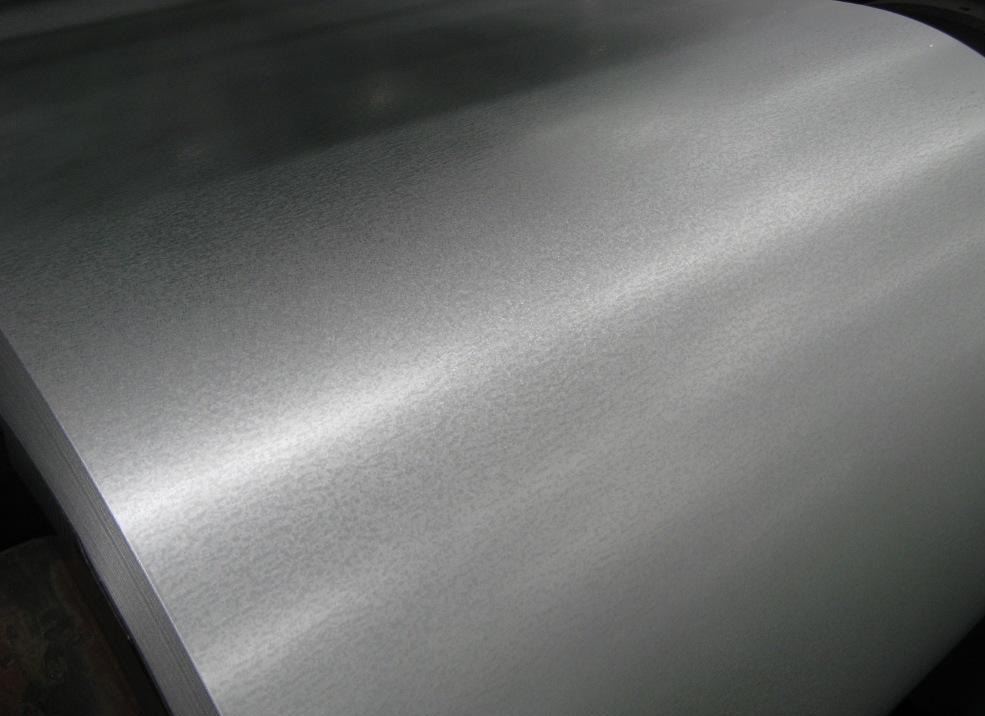
Warnings for the Vietnamese steel industry are appearing with increasing frequency recently. Most recently, in mid-May 2026, the Trade Remedies Department (Ministry of Industry and Trade) said that Australia had initiated an anti-dumping investigation on galvanized steel imported from Vietnam, involving two enterprises, Hoa Sen Group Joint Stock Company (HSG) and Nam Kim Steel Joint Stock Company (NKG).
Notably, the alleged dumping margin is up to 56.21% - enough to significantly erode the competitive advantage in price if the tax is officially applied.
The "trap" of growing too fast
In response to this information, HSG said that this is only the initial allegation made by the party requesting the investigation in the complaint, not the preliminary or final conclusion of the Australian investigation agency.
In the context of continuous export investigations, the Vietnamese steel industry is forced to restructure production, raw material sources and market strategies to maintain its place in the global supply chain.
However, an incident like the one in Australia is not an isolated incident, but just a slice of the broader picture, where trade barriers are increasingly tightening with Vietnamese steel.
Previously, in April 2026, the Trade Remedies Department also issued a warning against galvanized steel exports to Australia. This country has imposed anti-dumping and anti-subsidy taxes on similar products from India and Malaysia.
This development is even more remarkable when looking at Vietnam's export data. In 2025, galvanized steel export turnover to Australia will reach 29.5 million USD, an increase of 24% compared to 2024. Vietnam's market share accounts for 23.5% of Australia's total imports of this item.
"With turnover increasing and accounting for a significant proportion, exporters need to pay attention to the possibility of Australia initiating a trade defense investigation on galvanized steel products imported from Vietnam in the near future," the Trade Remedies Department emphasized in a previous warning.
Not only does it stop at galvanized steel, the pressure also spreads to many other product lines. With hot rolled steel, Australia has applied anti-dumping duties on imports from Japan, Korea, Taiwan (China) and Thailand.
In that context, Vietnam's exports still recorded a strong increase. In 2025, hot rolled steel turnover to Australia reaches 48.5 million USD, an increase of 105.8% compared to 2024. Vietnam's market share accounts for 26.1% of Australia's total imports of this item.
"With export turnover increasing rapidly and accounting for a large proportion, Vietnamese export businesses need to pay attention to the possibility of Australia initiating a trade defense investigation on this item. At the same time, businesses exporting to Australia need to avoid using main materials imported from China to produce products," the Trade Defense Department once noted.
The implicit rule here is quite clear: when market share increases too quickly, the risk of investigation also increases. Over the past many years, Vietnamese steel, with its strong growth momentum, has gradually become a commodity group that regularly appears on global trade defense warning lists. This reflects the increasingly strict level of supervision of the steel industry in the international market.
As commented by Mr. Le Viet, General Director of Southern Steel Company Limited - VNSTEEL (SSCV), the Vietnamese steel industry faces export pressure and trade barriers. Many countries (EU, US, Türkiye, India) increased self-defense/anti-dumping taxes on imported steel.
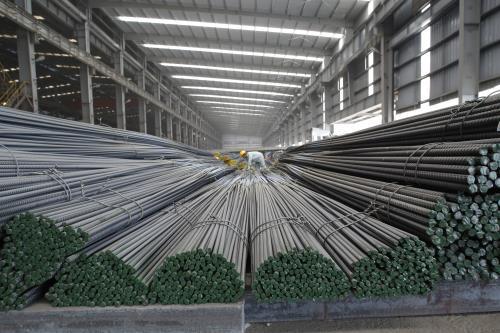
If Australia is a warning signal, then the US and Europe are the decisive fronts. As in March 2026, concrete reinforced steel imported from Vietnam was subject to an anti-dumping tax of up to 130%, according to preliminary conclusions of the US Department of Commerce (DOC).
Those who are able to adapt will survive
Or galvanized steel products are said to have suffered heavy losses from trade defense measures in recent times, directly impacted by anti-dumping taxes from the US (up to 162.96%). This causes galvanized steel exports in the first quarter of 2026 to continue to decrease sharply by 39.8% compared to the same period in 2025.
The EU is even more notable in that it is not only tightening with taxes, but is building a "dual barrier": both controlling trade and applying increasingly strict green standards.
Recently, in a report on the steel industry, the Analysis Department of NH Vietnam Securities Company (NHSV) clearly pointed out challenges from narrowed quotas and origin barriers for steel exported to the EU.
Specifically, from July 1, 2026, the EU officially reduces the annual tax-free quota by 47% to 18.3 million tons, and doubles taxes to 50% for imports exceeding the quota.
EU legislatures agreed that without exception, all EU trading partners, including Ukraine and countries with trade agreements with the bloc, would be allocated quotas.
NHSV believes that the core problem of Vietnamese enterprises lies in two main factors. Firstly, Vietnam is subject to a general quota, leaving almost no room to increase export output. Second is the increasingly fierce level of competition in the market.
NHSV believes that the core problem of Vietnamese enterprises lies in two main factors. Firstly, Vietnam is subject to a general quota, leaving almost no room to increase export output. Second is the increasingly fierce level of competition in the market.
According to NHSV, if quotas are not taken advantage of, high tariffs will become a big challenge for steel and galvanized steel exporters. At the same time, businesses must also meet higher technology standards, purchase carbon certificates and make emissions declarations. In the context of shrinking quotas combined with the Carbon Border Adjustment Mechanism (CBAM), businesses fall into a situation of "fee on top of fee".
Faced with the export market facing many tariff barriers, the most common reaction is that businesses must return to focusing on the domestic market. Like NKG, there is a strong focus on Southern distribution. Meanwhile, with the advantage of a large retail store system, HSG can easily focus on increasing sales volume in the domestic market to compensate for the gap in the export market.
But this is an immediate solution, not a strategic exit. The domestic market cannot absorb the entire huge capacity that the steel industry has invested in during many years of hot growth. When the whole industry flocks to its "home turf", domestic competition will become equally fierce. The pressure to reduce selling prices increases, leading to narrowing profit margins and the risk of canceling each other out.
More importantly, if they only pivot domestically without upgrading their international competitiveness, businesses will gradually lose their foothold in the reshaping global supply chain. And when you want to turn back, the door will be much narrower.
For that reason, experts believe that the restructuring of the Vietnamese steel industry is no longer a choice but a condition of existence. This requires green technology transformation, diversification of raw material sources, supply chain transparency, and export market diversification.
The new "wave" of trade remedies is not a short-term phenomenon. Enterprises that continue to rely on cheap prices and low-cost raw materials will quickly lose their competitive advantage. On the contrary, businesses that switch to green production, transparent supply chains and upgrade technology will have the opportunity to keep orders and even replace competitors eliminated from the market.
Source: VNBusiness
![[Report] Steel Market Q1/2026: Construction steel consumption surges, steel prices recover.](image/catalog/avatar-fb-4-20260505100240586-avatar-fb-20260505100732774.jpg)

.png)