.png)
Mô tả
The Energy Input Challenge
According to Nikkei Asia, Nippon Steel has launched a transition from blast furnaces to electric arc furnaces (EAFs), a key solution for reducing emissions in the steel industry. However, many issues remain related to the enormous electricity demand and the high cost of "green" steel.
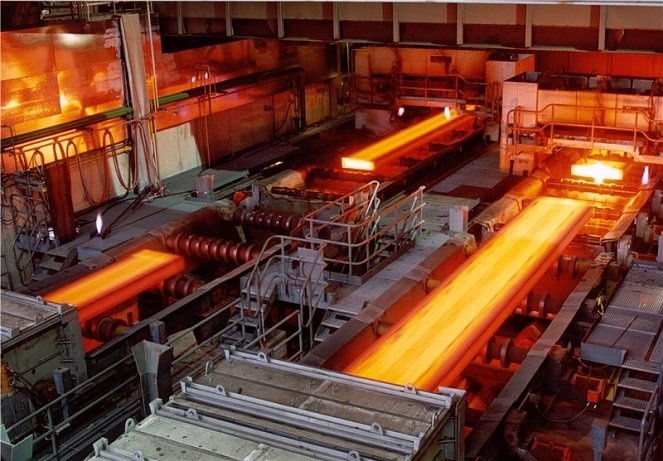
On Wednesday, the company held a groundbreaking ceremony for the construction of an electric arc furnace in the Yawata area, part of the Kyushu Works complex, on a large plot of land that is expected to be developed over the next few years.
"This is the beginning of a large-scale project in Yawata, a facility with a 125-year history," said Masahiro Nakata, General Manager of Kyushu Works.
Nippon Steel plans to invest 630.2 billion yen (approximately US$3.96 billion) in the project, with about 30% of the funding coming from the government. The project includes a 2 million tons/year steelmaking furnace, along with a sheet steel rolling mill and an on-site power generation system.
The furnace is expected to be operational in the second half of fiscal year 2029.
The transition is taking place amidst increasing pressure to reduce carbon emissions. The steel industry currently accounts for approximately 40% of Japan's total industrial CO₂ emissions. Compared to coal-fired blast furnaces that extract iron from ore, electric arc furnaces (which use scrap steel) emit only about one-quarter the carbon.
However, securing a reliable power supply is a major challenge. An electric arc furnace with a capacity of over 1 million tons can consume electricity equivalent to half to the full capacity of a nuclear reactor.
This is also a common problem for many other industries. The Kyushu region is also home to Taiwan Semiconductor Manufacturing Company (TSMC) chip manufacturing facilities serving the artificial intelligence sector. The total electricity demand of existing plants and expansion projects could be equivalent to 30–40% of the output of a nuclear reactor.
Data centers, which are rapidly developing alongside the advent of artificial intelligence (AI), also consume a significant amount of energy.
Unlike heavy industrial projects such as electric arc furnaces or semiconductor plants, data centers can be built in just 1–2 years, leading to a rapid increase in electricity consumption. According to the Inter-Regional Coordination Organization of Transmission Operators, the electricity demand for data centers in Japan could increase tenfold between fiscal years 2026 and 2035.
Nippon Steel's plan in Yawata has taken into account the risk of future power shortages. In addition to the supply from Kyushu Electric Power, the company plans to build four 500 MW liquefied natural gas (LNG) power plants on-site, with expected operation starting in 2031. These plants are expected to meet almost all of the electricity needs for the electric arc furnace.
Compared to coal-fired power plants, LNG plants emit only about half the amount of CO₂. Nippon Steel can allocate this emission reduction to its products, marketing them as "green" steel. In the future, emissions could be further reduced by co-burning LNG with hydrogen or ammonia.
Price Pressure
On the demand side, the challenge of product consumption remains. Steel produced from electric arc furnaces is currently about 40% more expensive than steel produced from blast furnaces.
In fiscal year 2025, Japan implemented a subsidy of up to 50,000 yen for clean energy vehicles manufactured using green steel. According to an industry source, this policy could partially offset the increased cost of green steel.
Major automakers such as Toyota and Nissan have begun purchasing low-emission steel. Buyers are provided with emission reduction certifications to incorporate into their product carbon footprint reports.
If green steel becomes widespread in the automotive industry, which uses a huge amount of steel, it could spur adoption in other sectors.
“Decarbonization is not a sector that can yield a return in the short term,” said Tadashi Imai, President of Nippon Steel.
“Private companies cannot undertake this process on their own,” he added.
![[Report] Steel Market Q1/2026: Construction steel consumption surges, steel prices recover.](image/catalog/avatar-fb-4-20260505100240586-avatar-fb-20260505100732774.jpg)

.png)
.png)

![[Report] Steel Market Q1/2026: Construction steel consumption surges, steel prices recover.](https://ccnvietnam.vn/image/cache/catalog/avatar-fb-4-20260505100240586-avatar-fb-20260505100732774-480x320.jpg)
