.png)
Mô tả
According to the World Steel Association's Short-Term Outlook (SRO) report for 2026 and 2027, the decline in steel demand in China could narrow to -1.5% in 2026, as the housing market adjustment approaches its bottom.
Infrastructure investments in the country are expected to pick up slightly this year, supported by local government efforts to maintain moderately strong GDP growth.
Worldsteel forecasts that steel demand from manufacturing industries will maintain moderate growth as exports continue to expand. However, the organization believes that a more challenging global trade environment remains a significant negative risk, potentially slowing manufacturing demand in the coming years.
For 2027, Worldsteel forecasts that China's steel demand will essentially remain flat compared to 2026 levels. This outlook is based on the expectation that the prolonged real estate sector correction will largely be complete by 2027, easing the downward pressure that has dominated the industry since 2021.
“As the real estate sector restructuring stabilizes, we forecast that China's steel demand could shift to a cyclical stabilization phase,” Worldsteel stated.
Last October, Worldsteel forecast a 2% decline in China's steel demand in 2025; however, the recently released official figures show an actual decline of 7.1%. Other indirect evidence suggests the decline may be lower than this figure.
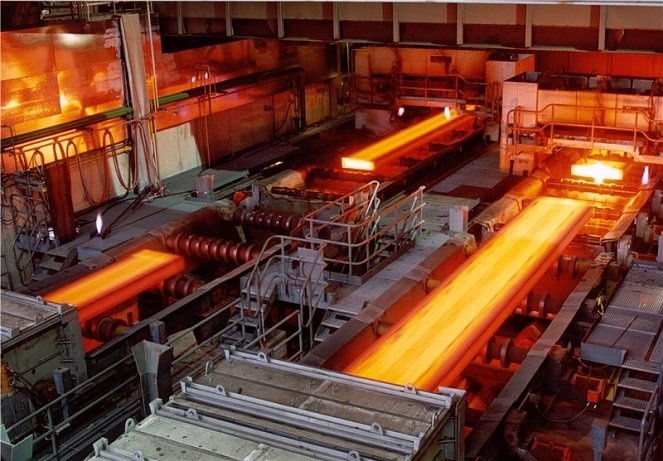
Regarding production, China's crude steel output in March fell 6.3% year-on-year to its lowest monthly level since 2020, amid shrinking profit margins and declining exports due to conflict in the Middle East, according to Reuters.
The National Bureau of Statistics of China (NBS) said the world's largest steel producer manufactured 87.04 million tonnes of crude steel in March.
Based on this data, Reuters' calculations for March output amounted to an average daily output of 2.81 million tonnes, down from 2.99 million tonnes in March 2025.
Overall, in the first quarter of 2026, China's crude steel output fell 4.6% year-on-year to 247.55 million tonnes.
Steel industry profit margins were negatively impacted in the first quarter due to rising input costs, partly stemming from escalating fuel prices as the Iran conflict disrupted shipping through the Strait of Hormuz.
"Raw material prices, including iron ore, have been driven by increased shipping costs due to the conflict in the Middle East, while steel price increases have been hampered by large inventories," said Xin Ge, Deputy Director of consulting firm Lange Steel.
"This has narrowed steel industry profit margins, making some producers hesitant to ramp up production," Ge added.
According to Reuters' calculations based on data from consulting firm Mysteel, on average only about 41% of steel producers were operating profitably in March, compared to 53% in the same period of 2025.
Weak demand from a struggling real estate market also hampered steel production as new home prices in China continued to fall in March.
Source: Vietnambiz
![[Report] Steel Market Q1/2026: Construction steel consumption surges, steel prices recover.](image/catalog/avatar-fb-4-20260505100240586-avatar-fb-20260505100732774.jpg)

.png)
.png)

![[Report] Steel Market Q1/2026: Construction steel consumption surges, steel prices recover.](https://ccnvietnam.vn/image/cache/catalog/avatar-fb-4-20260505100240586-avatar-fb-20260505100732774-480x320.jpg)
