.png)
Mô tả
The surge in imports largely stems from the decline in prices of key raw materials for the steel industry. Simultaneously, this is also "timely" given the risk of widespread repercussions from US and Israeli attacks on Iran, extending beyond the energy sector.
China imported 210 million tons of iron ore in the first two months of 2026, a 10% increase year-on-year, according to customs data released on March 10th. The country now accounts for approximately three-quarters of global seaborne iron ore shipments.
Previously, its iron ore imports in December 2025 reached a record 119.6 million tons, bringing the total for the entire year to an unprecedented 1.26 billion tons.
However, this increase in imports is not due to higher steel production demand but rather to stockpile reserves.
Evidence of this is the 3.6% year-on-year decline in steel production during the first two months of the year, falling to 160.34 million tons, according to official figures released on March 16th. This weakening steel production continues the trend of 2025, when full-year production fell to its lowest level in seven years, reaching 960.81 million tons.
Meanwhile, port inventories rose to 166.91 million tons in the week ending March 13th, according to SteelHome data. Compared to the recent low point in early August 2025, this figure represents an increase of approximately 28% and is the highest level since 2012.
Several factors are driving China's iron ore imports, but the main factor is likely price.
On the Singapore Exchange, iron ore futures prices have been falling steadily since reaching a 14-month peak of $108.89/tonne on January 12.
This decline ended at $98.2/tonne on February 20, but lasted long enough to boost cargo arrivals early in the year and could continue into March. Kpler commodity analysts estimate seaborne imports at around 109 million tonnes.
Ample supply from leading exporters Australia and Brazil also contributed to increased availability, while China acted as a buffer absorbing excess ore on the market.
Since the lows at the end of February, prices have rebounded, partly due to the impact of conflict in the Middle East, reaching $107.10/tonne on March 17, before falling slightly to $106.30/tonne on Wednesday (March 18).

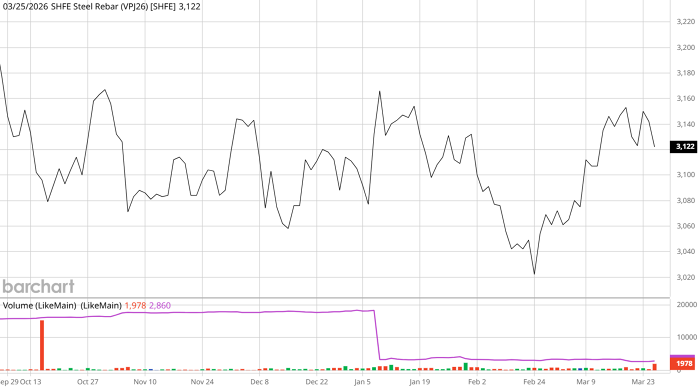
Iron ore price trends over the past year (Source: Tradingeconomics, unit: USD/ton)
Risks from Iran
To date, the impact of the conflict in the Middle East on iron ore flows into China has mainly manifested in increased shipping costs, due to rising fuel oil prices along with other oil products such as diesel and jet fuel.
However, the risk of broader disruption remains, especially if major exporting countries such as Australia and the fourth-largest exporter, South Africa, experience diesel shortages.
Both countries rely heavily on imports of refined oil products, with the mining sector in Australia alone accounting for approximately 40% of total diesel demand.
In the event of a shortage of refined fuel supplies at any price level, Australia may be forced to allocate fuel, prioritizing food production and distribution as well as emergency services.
Shutting down the mining industry would be an extreme measure, but it could become a last resort if fuel-exporting countries restrict or halt supplies, as China has already done.
Currently, China is likely to maintain high iron ore imports, as prices are not yet high enough to act as a deterrent.
Another incentive to continue imports is the risk of supply disruptions due to diesel shortages, although this possibility remains relatively low.

.png)

.png)