.png)
Mô tả
A year has passed since U.S. President Donald Trump imposed a 50% tariff on imported steel and aluminum in June 2025. Officials had predicted that this move would revitalize the U.S. industrial base and protect domestic producers from a wave of cheap imports, according to the GMK Center.
To date, this reform has yielded mixed results: steel producers have gained significant advantages, while consumer goods industries have faced rising costs. A report by Eurometal, citing S&P Global, indicates this.
Thanks to the tariffs, U.S. steel imports have plummeted. This has allowed domestic steel prices to surpass global market prices, while enabling U.S. mills to gradually increase production and operating capacity despite stable market demand.
The industry is witnessing a wave of capital investment totaling $50 billion. Nucor Corp. is actively expanding its operations by building a new smelter in Arizona, a microsteel plant in North Carolina, and galvanizing lines in Indiana and South Carolina. Hundreds of new jobs have been created in the steel industry over the past year.
Rising Costs
However, the expected production boom for downstream steel-consuming industries has not materialized. Tariff measures have significantly increased costs for processing sectors.
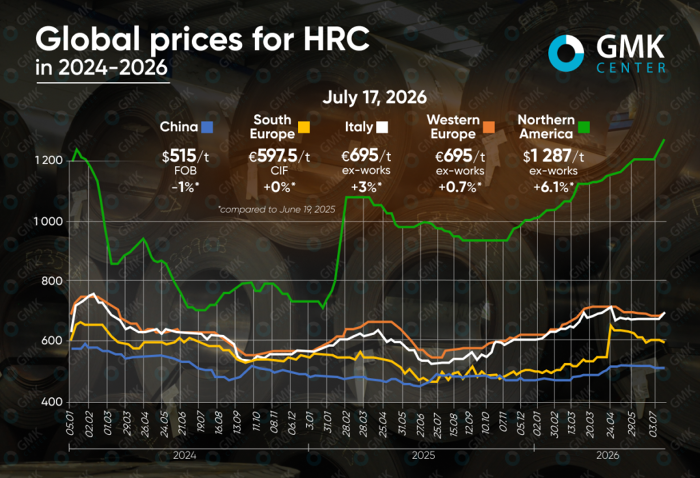
First, prices have skyrocketed. From April 2025 to April 2026, the producer price index for iron and steel increased by 10.4%, and for steel products by 13.3%. As of the end of May, the price of hot-rolled coil steel in the US reached $1,201.5 per ton, more than double the cost of similar products in Southeast Asia ($571).
Secondly, construction has slowed down. Higher raw material prices have driven up construction costs. In March 2026, spending on non-residential construction decreased by 2.1% year-on-year. This was also affected by the completion of major infrastructure projects from the Biden administration.
Finally, supply chains are being impacted. The automotive and steel industries have been forced to renegotiate contract terms to offset the cost of tariffs due to declining profit margins.
"For manufacturers working with materials subject to tariffs, decisions to switch suppliers, redesign products, or shift production capacity back to the U.S. require a long-term vision and confidence in the return on investment," noted Mark Gilbert, global director of the Center for Geopolitics at the Boston Consulting Group (BCG).
Despite the localized successes of steel producers, overall U.S. manufacturing employment remained stable at 12.6 million. The number of direct jobs at steel mills in March reached 84,300, nearly the same as last year.
Experts estimate that the U.S. government will need to take further policy steps to stimulate the manufacturing sector, including reforms to environmental regulations and licensing systems.
It should be noted that, according to the European Steel Association (EUROFER), since the US increased steel tariffs to 50%, exports of steel products from the European Union (EU) to the US have decreased by one-third. Three quarters after these tariffs were implemented (June 4, 2025), this figure had fallen by 34% year-on-year to 1.94 million tons.
Source: H.Mĩ (According to GMK Center)
.jpg)


