.png)
Mô tả
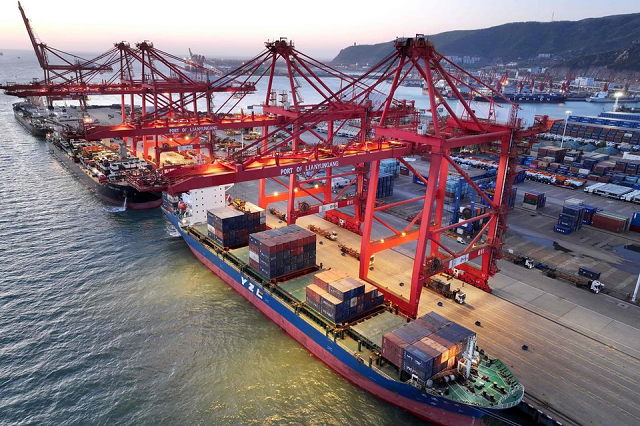
Vietnam's steel exports in the first five months of 2026 remained stable in value, despite nearly flat production volume.
According to data from the Customs Department, in May 2026 alone, Vietnam exported approximately 851,000 tons of steel, earning $612 million. Compared to the previous month, export volume decreased by more than 17%, but the average export price increased to $719/ton, nearly 9% higher than in April and nearly 7% higher than the same period last year.
Cumulatively, in the first five months of the year, steel exports reached 4.7 million tons, with a value of $3 billion. Compared to the same period in 2025, production volume remained almost unchanged, while the value increased slightly by 0.1%.
ASEAN continues to be Vietnam's largest steel export market with 1.66 million tons, worth over $1 billion. This region currently accounts for over 35% of Vietnam's total steel exports. Demand from ASEAN is supported by construction and infrastructure investment in many countries in the region, along with geographical proximity and intra-regional tariff preferences.
Within ASEAN, Cambodia continues to be the largest import market with over 663,000 tons, an increase of more than 5% year-on-year. Indonesia recorded a strong increase of nearly 29% due to demand for materials for large infrastructure projects, while Malaysia also increased by nearly 19%.
Conversely, exports to Laos, Singapore, and Thailand decreased due to increased competition from domestic producers.
The US is experiencing strong growth, while the EU continues to weaken.
Notably, the US became the bright spot of Vietnam's steel industry in the first 5 months of the year. Exports to this market reached more than 661,000 tons, worth nearly 397 million USD, an increase of about 34% in volume and nearly 29% in turnover compared to the same period last year.
Demand from public investment projects and infrastructure construction in the US is considered the main driving force to help Vietnamese businesses expand exports, although average selling prices decreased slightly.
In contrast to the US, exports to the EU decreased sharply. In 5 months, the amount of steel exported to this area decreased by more than 18% in volume and over 23% in value.
The decline mainly comes from weak consumer demand, slow recovery of European industry and the EU's continued application of trade defense measures and strict environmental standards. However, some markets such as Poland and Belgium still recorded positive growth.
Expand new markets
Besides traditional markets, steel exports to Brazil, Türkiye and Russia recorded high growth from a low base, opening up more space for Vietnamese businesses in the context of diverging global demand. In particular, Russia marked an increase in purchases from Vietnam of up to 1,000% in volume and 1,500% in turnover.
On the contrary, many markets such as Taiwan (China), South Korea, Australia, the UK and Saudi Arabia simultaneously reduced steel imports from Vietnam, reflecting the uneven recovery in consumption trends and changes in each country's trade policy.
Overall, the results of the first 5 months of the year show that Vietnam's steel exports still maintain stability in the context of many fluctuations in the world market. The growth driver is shifting to ASEAN and the US, while businesses still need to continue diversifying their markets to reduce dependence on regions with weak demand such as the EU.
.jpg)


