.png)
Mô tả
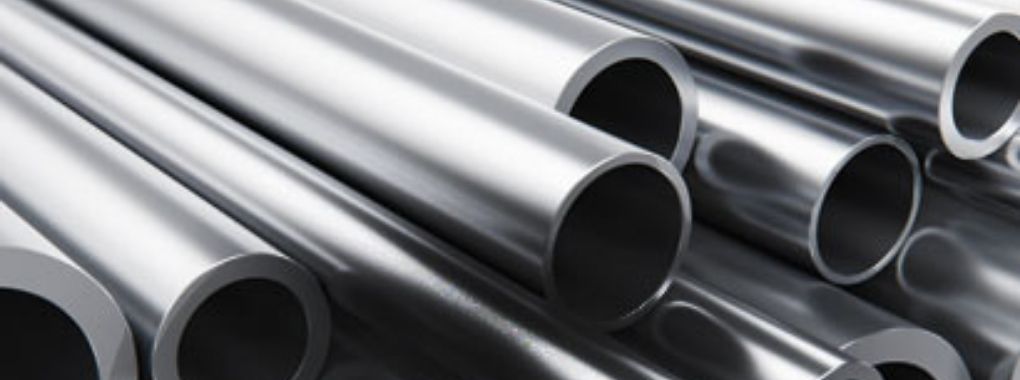
1. OVERVIEW OF SEAMLESS STEEL PIPES
Seamless steel pipes are produced through a casting process. Steel is melted at high temperatures and then poured into molds to form the desired size and shape.
Typically, seamless pipes range from diameter φ10 to φ60, but depending on project requirements, the diameter can be larger. Common standard lengths are 6m or 12m, and they can also be customized according to customer requirements.
2. CLASSIFICATION
2.1. By composition:
Alloy seamless steel pipes: Made from various steel alloys such as carbon steel, Cr-Mo, stainless steel, nickel alloys… Commonly used in oil & gas, construction, and machinery manufacturing.
Carbon seamless steel pipes: Produced from high-quality carbon steel, applied in oil pipelines, water pipelines, chemical transportation, and water treatment.
Stainless seamless steel pipes: Corrosion- and rust-resistant, widely used in the food, medical, and chemical industries.
2.2. By application:
Construction seamless steel pipes: Used in columns, beams, scaffolding, bridges, buildings… Mainly made from carbon steel or alloy steel, meeting strict technical standards.
Structural seamless steel pipes: Used in mechanical engineering and manufacturing.
Chemical seamless pipes: Designed to transport liquid chemicals and industrial waste.
Oil seamless steel pipes: Made from J55, N80, P110 steel grades, applied in oil wells and pipelines.
High-grade furnace seamless pipes: Used for transporting fluids in drainage plants, hydropower, etc.
2.3. By size:
Small-diameter pipes: Below 89mm, with wall thickness under 12mm.
Medium-diameter pipes: From 89–360mm, with wall thickness 12–40mm.
Large-diameter pipes: Above 360mm, with wall thickness over 40mm.
Thick-walled pipes: Considerably thicker than standard pipes, suitable for high-strength, high-pressure applications.
Ultra-thick pipes: Extremely thick walls, used in environments requiring high heat resistance, pressure resistance, and mechanical strength.
3. SPECIFICATIONS OF SEAMLESS STEEL PIPES
Standards:
API / ASTM / EN / JIS / STP etc.
Steel Grades:
API 5L GR.B, X80 PSL1 PSL2, API 5CT J55, P110
ASTM A53 GR.A GR.B / A106 GR.A GR.B GR.C / A333 GR.1 GR.6
A210 GR.A GR.C / A192 / A179 / A213 T11-T91 / ASTM A335 P11-P92
C250 / C250LO / C350 / C350LO / C450 / C450LO
EN10297 / 10210 / 10216-1 / 10216-2
E235-38Mn6, S235JRH-S355K2H, P195TR1-P265TR2, P195GH-P265GH
JIS G3454 3455 3456 3445 3461 3462
STPG370, STS370, STPT370, STKM11A-STKM14C, STB340-STB510 , STBA12-STBA24
Sizes:
Outer diameter: 21.3–1200mm
Wall thickness: 1.5–200mm
4. MANUFACTURING PROCESS
Thanks to its special production process, seamless steel pipes can withstand high pressure, high temperatures, and heavy loads. They are widely used in the oil & gas industry, boilers, chemical plants, mechanical engineering, and heavy industries. Below are the main steps:
Step 1: Preparing steel billets – Raw material is solid round billets. Ends are trimmed to remove defective parts and ensure consistency.
Step 2: Heating – Billets are heated in a furnace at 1,200–1,250°C until ductile.
Step 3: Piercing – The heated billet is pierced by a mandrel to create a hollow center. This step is crucial to pipe quality, requiring strict control to prevent cracks or misalignment.
Step 4: Rolling and sizing – The hollow billet is rolled and stretched to refine diameter and wall thickness as required. This produces a rough pipe (pipe shell).
Step 5: Straightening and elongating – Pipes are straightened to remove bending and elongated to standard lengths, ensuring uniformity.
Step 6: Cutting – Pipes are cut into sections based on standard or custom lengths.
Step 7: Quality inspection
Visual inspection: to detect surface defects.
Non-destructive testing: using ultrasonic, eddy current, X-ray, etc., to detect internal flaws without damaging samples.
Step 8: Packaging and finishing – Pipes meeting standards are marked, labeled, bundled, and packaged for transportation and export.
5. ADVANTAGES AND DISADVANTAGES OF SEAMLESS STEEL PIPES
5.1. Advantages:
High load capacity: No weld seam, ensuring strong structure without bending or deformation under heavy loads.
High durability: Withstands pressure and heavy loads.
Heat and corrosion resistance: Suitable for harsh environments like high temperatures, chemicals, and seawater.
High precision: Consistent dimensions, ideal for mechanical equipment.
5.2. Disadvantages:
Heavy weight: Difficult to transport and install.
Difficult machining: Thick walls and hard surface make cutting and processing challenging.
Hard to recycle: Complex and costly reuse process.
Non-uniform structure: Rapid casting and cooling may cause mechanical properties to be uneven.
Environmental impact: High energy consumption during production, causing negative environmental effects and higher costs.


-480x320.jpg)